


Every family business has a story: years of hard work, community ties, tradition and lore, and countless decisions made together as a family. So it’s no surprise that building an exit strategy can elicit strong emotions—excitement, fear, relief, sadness, or a bittersweet blend of them all.
But trying to transition without a solid exit plan can threaten to derail years of hard work and even sour familial relationships. In this article, I’ll explain what a family business exit strategy is, why it matters, how to build one step-by-step, and the pros and cons of four common exit paths—so you can protect your legacy and the relationships that made it possible.
What is A Family Business Exit Strategy?
Why Is It Important to Have a Well-Considered Exit Strategy?
How to Build a Strategic Exit Plan
3 Types of Family Business Exit Strategies
Family Business Exit Plan FAQs
A family business exit strategy outlines when and how you will transition out of ownership, ensuring a smooth transfer and maximizing business value.
Even if you’re years away from retirement, the best thing you can do for your business, your family, and your financial success is to plan for your exit strategy proactively through family business financial planning. A well-planned exit strategy helps you get more for all your hard work—and prevents the headaches messy transitions bring.
Family businesses are rarely just about the money; they’re steeped in tradition, family history and dynamics, generational expectations, and emotions. This complicates decisions about an exit strategy because it’s not just about extracting the most financial value; it’s also about legacy.
I’ve seen firsthand what happens when there isn’t a plan:
A clear exit strategy brings structure to what can otherwise become an emotionally charged guessing game. It helps you:
If your goal is to keep the business in the family, succession planning becomes even more critical. Many family businesses struggle to transition from one generation to the next successfully; often not because the business isn’t viable, but because the plan (and the communication around it) isn’t clear.
Succession success tends to come down to three things:
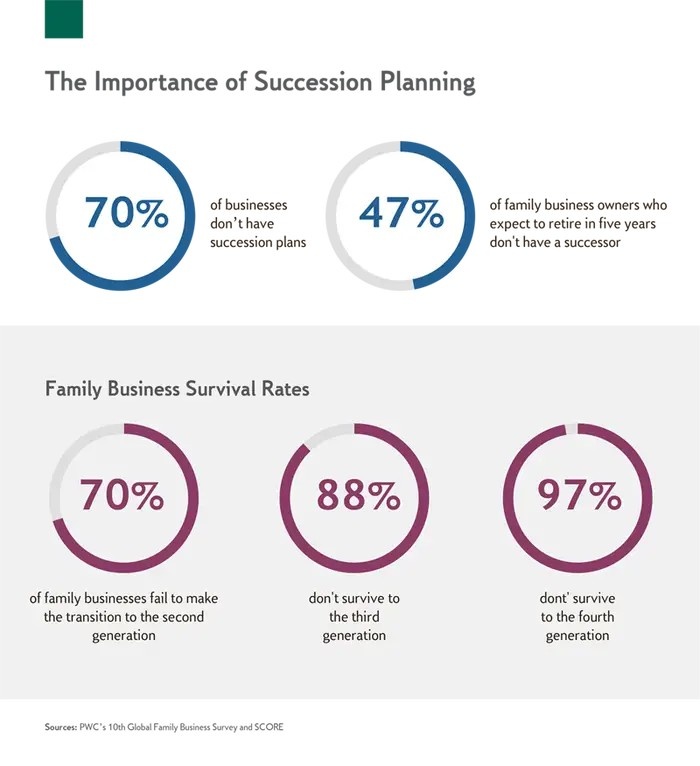
Exit strategies are particularly important for family business owners who want
their family business to survive through generations.
Source: Business Insider
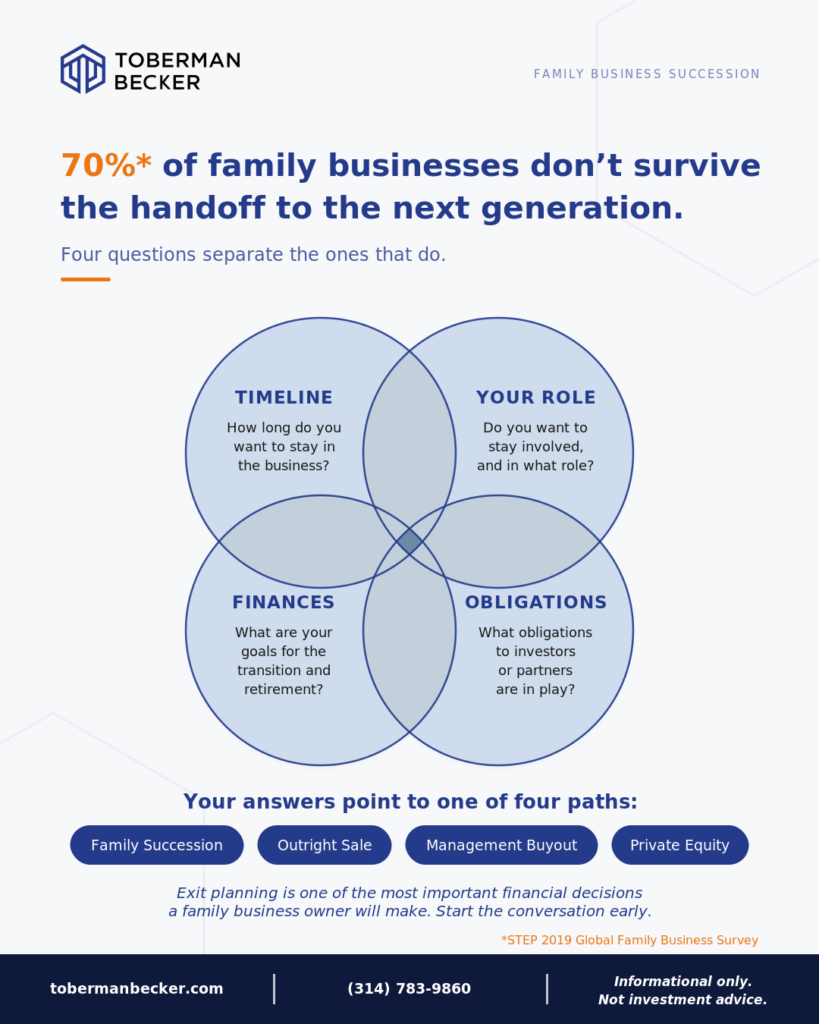
The overlap between business decisions and family dynamics makes owning a family business uniquely rewarding—but it can also make difficult decisions and conversations even harder. Many family business owners feel anxious about talking to their family about their eventual transition, especially when expectations aren’t clear.
The following steps can help ease the discomfort of transitioning and set you up for a successful exit:
Having clear answers to these questions will help you decide which exit strategy works best for you, your family, and your business.
The Five-Year-Plan: A Clear Path to Family Business Succession is your comprehensive guide to a smooth succession, retirement preparation, and the preservation of your family’s legacy.
There are different types of exit strategies, each with its own pros and cons. What will work best for your family business depends on your unique situation and who (if anyone) is prepared to take over.
Selling your family business allows you to realize financial value and generate income for retirement.
There are several buy-sell techniques commonly used by smaller family businesses, including:


A strong exit plan should do more than transfer ownership. It should protect:
At Toberman Becker Wealth, we help family business owners build a plan that connects business decisions to the rest of their financial life. That often includes coordinating with your attorney and CPA to ensure your exit plan aligns with your strategy, tax planning, estate considerations, and timing.
We can help you create a robust plan that accounts for your present and future goals so that you can walk into the next phase of your life and business with confidence and fulfillment.
When done right, an exit strategy doesn’t feel like an ending—it feels like a confident, well-earned next chapter.
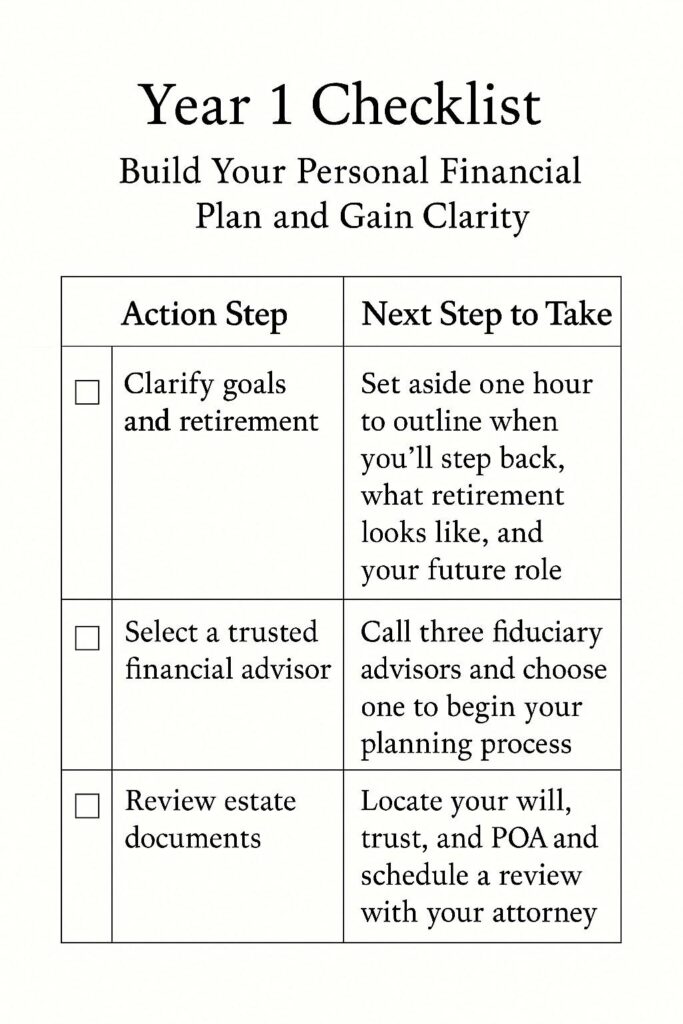
Start early, be open, and be honest. Succession conversations are far more productive when no one feels rushed or blindsided.
I also recommend working with a financial planner who specializes in family business financial planning. An objective third party can help facilitate difficult conversations and reduce the risk of family disputes.
The biggest mistake I see is not having an exit strategy at all. I’ve seen owners of family businesses of all sizes and in all industries procrastinate forming a succession plan, putting their family, their business, and their financial security at risk. That’s what inspired me to write The Five-Year-Plan: A Clear Path to Family Business Succession: to help families determine a strategy and create a smooth transition plan for lasting success.
It depends on your financial situation and priorities (speed, continuity, income, or keeping the business in the family).
When determining what will work for you, consider:
In many cases, yes. Some exit strategies allow you to step back gradually or retain an advisory role. Your level of involvement depends on the successor’s readiness, the terms of the sale or transfer, and what role you want to play. This is one of the most important items to clarify early in your planning.
Disclosure: Any mention of a particular security and related performance data is not a recommendation to buy or sell. The information provided on this website (including any information that may be accessed through this website) is not directed at any investor or category of investors and is provided solely as general information. Nothing on this website should be considered as personalized financial advice or a solicitation to buy or sell any securities.

Craig Toberman is a Partner at Toberman Becker Wealth – a fee-only, fiduciary financial advisor based in St. Louis. He assists families and businesses with strategic financial planning and long-term wealth management. He has over a decade of experience in financial services and has crafted custom financial plans for hundreds of families and businesses.